27 August 2026 — Independence Day of the Republic of Moldova
On Thursday, 27 August 2026, the Civic Movement “Construim Încredere” (“Building Trust”) chose to celebrate the Independence Day of the Republic of Moldova in a way that brought us even closer to one of the most important questions of our time: What could encourage young people to stay at home or return home and build their future here?
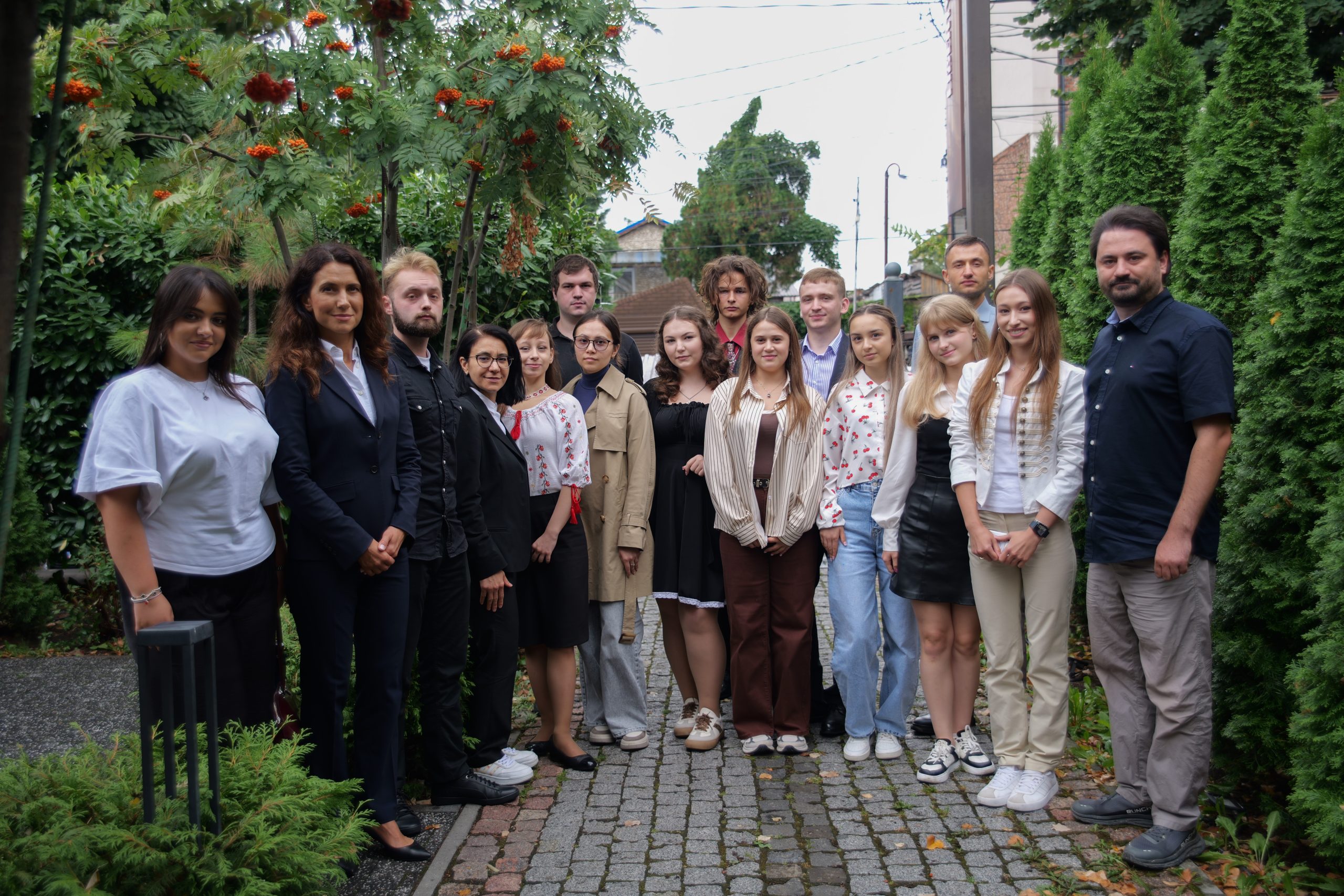
On this occasion, we organised a roundtable discussion with the young people who accepted the challenge of taking part in the first edition of the National Essay Competition for young people from the Republic of Moldova and young adolescents from the diaspora. The competition focused on migration and on the reasons that could encourage young people to remain in the country or return home.
Several dozen young people took part, and their reflections surprised us, made us think and, above all, made us listen. Because after reading each paper, we discovered not merely an essay, but a person, a thought and a story.
Some wrote with hope. Others wrote with doubt. Some were more critical. Others were more idealistic.
Yet every one of these young people tried to answer a question that has no simple answer: What would make us choose to stay at home or return home?
For some, “home” may mean family. For others, it may mean a village, a city, a language, a memory, a street or a beloved voice. It may mean the place where they took their first steps or the place where they can still imagine their future. And perhaps this is one of the most important conclusions of our competition: we cannot speak about the future of the country without listening to the voices of those who will build it.
We would like to thank the evaluators — Ana Balan, Ștefan Popov and Lilia Petriciuc — who read every submission carefully and responsibly. Reaching the final results was by no means easy.
The essays were evaluated on the basis of clear criteria. Yet beyond all the criteria and scores, every essay contained something that cannot be measured in points: the voice of the person who wrote it. And perhaps that voice was the most important thing we discovered.
In the young people’s essays, we found questions, frustrations, hopes, ideas and a desire to see a Moldova where they can grow, study, work and live with dignity.
It was a day about independence and about the future. For us, celebrating Independence Day in the company of these young people had a special meaning. Independence is not only a page in history or a date marked on the calendar. It also means taking responsibility for building a country in which younger generations can imagine their future.
That is why the meeting on 27 August was not merely an awards ceremony. It was a moment of dialogue, listening and trust.
To recognise the work and involvement of the participants, three prizes were awarded in each of the competition’s two categories: “From Moldova” and “Diaspora.”
“From Moldova” Category
1st Place — 87 points: Victoria Stoian
2nd Place — 86 points: Olga Stratu
3rd Place — 83 points: Anastasii Balan
“Diaspora” Category
1st Place — 84 points: Ina Hapun
2nd Place — 82 points: Ecaterina Colesnicenco
3rd Place — 81 points: Nadea Revenco
We sincerely congratulate all the winners, as well as every participant who had the courage to put their thoughts on paper and speak about Moldova as they see it, feel it and imagine it.
We would also like to thank our colleagues and everyone who contributed to organising this initiative, those who believed in the idea of the competition and helped make this meeting possible.
But above all, we thank the young people.
Thank you for writing. Thank you for having the courage to express your thoughts.
Thank you for giving us the opportunity to listen to you.
Congratulations to all participants!
And never stop believing, dear young people, that your voice matters.
Because a country is built not only through buildings, roads and institutions, but also through the people who choose to believe in it and imagine a future here.
Building trust. Together.
Summary of the Ideas, Hopes and Reasons That Could Encourage Young People to Return and Build Their Future in the Republic of Moldova
The essays reveal one essential idea: young people are not rejecting the country in which they were born. They want a Republic of Moldova where they can live, work and develop under fair and dignified conditions.
Among the main reasons that lead them to leave, or that could influence their decision to return, are the following:
Infrastructure and the need for modernisation. The legacy of Soviet-era infrastructure and the insufficient modernisation of essential networks and systems in many areas of everyday life encourage young people to seek their future abroad.
Quality of public services. The condition of hospitals and schools, the quality and comfort of public transport, and workplace conditions directly affect people’s quality of life and emotional well-being.
Access to housing. The possibility of obtaining housing through preferential loans or reduced interest rates could help young people at the beginning of their independent lives build their future in their own country.
A fair and competitive labour market. The lack of genuine opportunities, unfair competition and illegal practices push young graduates to seek a professional environment abroad that is based on merit and fairness.
Fighting corruption. Corruption is perceived as one of the major obstacles to development and to strengthening young people’s trust in public institutions.
Equal opportunities. Biased conditions in university admissions or recruitment create a sense of injustice and encourage some young people to look abroad for a system in which effort and competence are valued.
Salaries that make a decent standard of living possible. Incomes that are insufficient in relation to living costs and young people’s aspirations are an important reason for choosing emigration.
The quality and recognition of education. Young people want a high-performing university system whose qualifications and competencies are recognised and valued internationally.
Particular emphasis should be placed on education reform, beginning with teachers’ salaries and professional training.
There should be greater promotion of camps, study visits, excursions and international exchanges, because without such experiences young people may grow up with the illusion that life abroad is necessarily better.
Renovated student dormitories, larger scholarships, motivating salaries, more opportunities and greater access to international experience would make local universities more attractive.
Accession to the European Union and the elimination of corruption.
Depopulation of rural areas.
The movement of the rural population towards urban centres should be reversed in order to ensure greater territorial balance.
Resources should be directed not only towards consumption but also towards investment.
Building strong economic infrastructure, including the development of modern farms near villages, could create jobs and help keep people in rural areas.
The pension system should be reconsidered and additional mechanisms for saving for the future should be developed.
Hopes
“I hope that one day the road home will no longer be only the road we take during holidays or celebrations. It will be the road we choose for our future.”
Reflections from Participants
“A nation that does not respect its elderly is a nation condemned to perish!”
“We are all of the same water and soil, and this is what unites us; we all share one belief: sacred is our home!”
Strengths of the Republic of Moldova
At the same time, the essays do not present only problems. They also highlight reasons why young people might choose to stay or return.
The quality of higher education continues to improve.
Universities in the Republic of Moldova are developing international partnerships and offering access to programmes such as Erasmus+, scholarships and academic mobility opportunities.
Some partnerships make it possible for students to study at two educational institutions and obtain a double degree.
Family, roots, language, culture and a sense of belonging remain powerful reasons for returning home.
The emotional dimension of migration is one of the strongest themes found in the essays: leaving affects not only those who leave, but also those who remain behind.
Questions That Remain After Reading the Essays
Rhetorical questions occupy a particularly important place, as they capture the tension between the promise of greater material well-being and the need for family and belonging:
“What is the value of a better life if, one day, you end up saying goodbye for the last time to your mother’s face through a screen?”
“What could be more painful for a child than learning what the absence of a parent means?”
“Is it worth accepting a job offer abroad at the cost of being separated from parents who are slowly growing older?”
The question posed by the essay competition — “What would make you return home?”, rather than “Why did you leave the country?” — encourages reflection on positive solutions rather than focusing solely on negative criticism.
And the message that can conclude this synthesis particularly powerfully is:
“The real victory will not come when young people stop leaving, but when they have reasons to stay.”
This final idea is, in fact, the common thread running through all the essays: young people are not asking for a perfect country. They are asking for a country in which they feel they have real opportunities, fairness, security, respect and a future.