

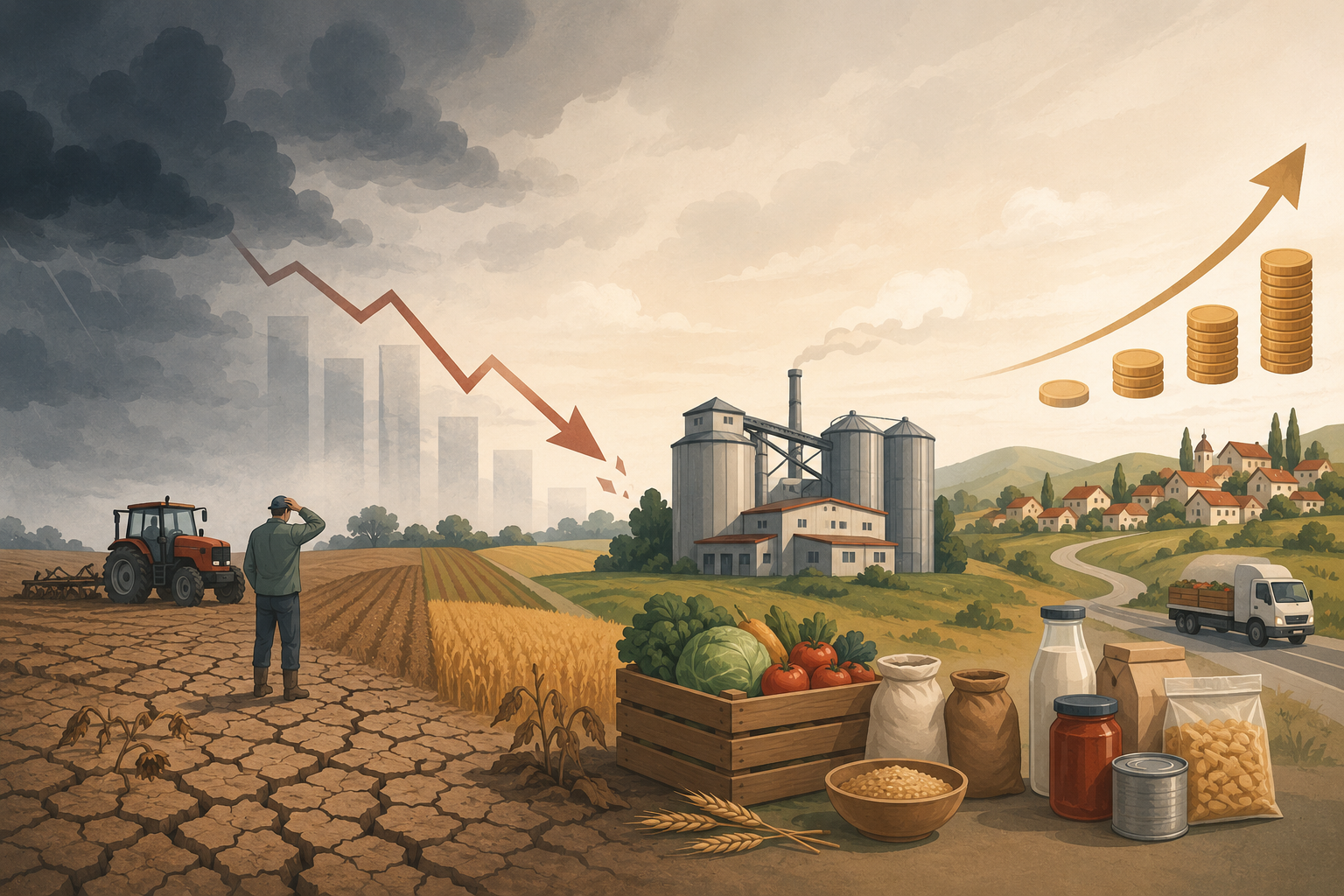
Position Paper. Between Fiscal Simplification and Loss of Competitiveness: What Agriculture, Food Processing and Rural Areas in Moldova Risk
The Civic Movement “Building Trust” signals the risks that the proposed changes to the 2027 Fiscal and Customs Policy may generate for the agri-food sector, food processing and rural communities in the Republic of Moldova.
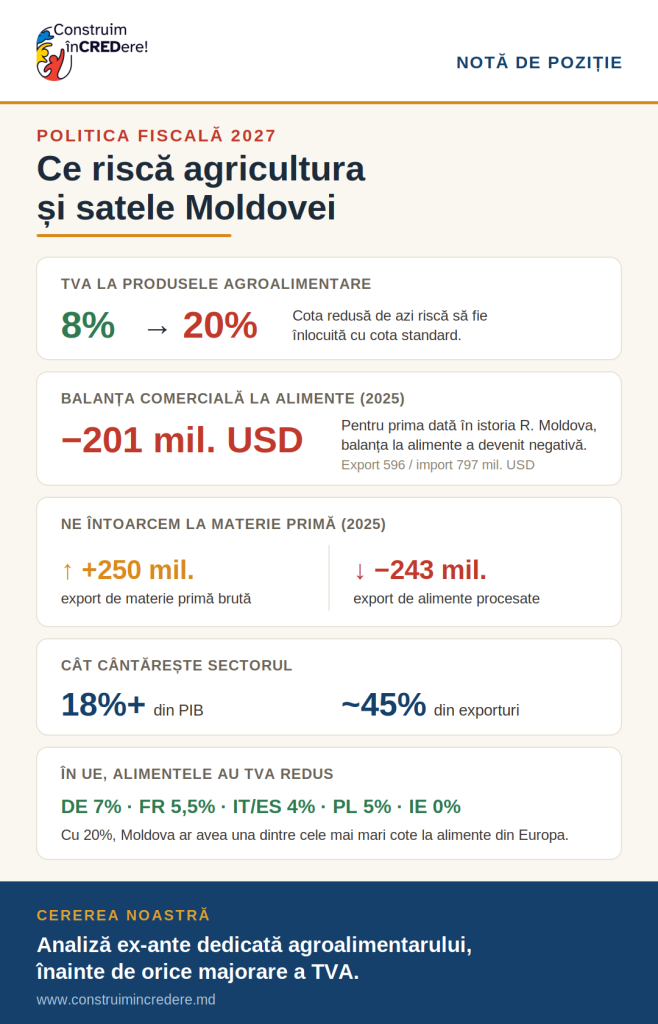
The Movement draws attention to the fact that increasing the fiscal burden, including through a possible VAT increase for certain agri-food products, may lead to higher costs for local production, reduced margins for farmers and processors, postponed investments and a loss of competitiveness for Moldovan products. At the same time, these measures may affect the liquidity of economic operators, as well as access to machinery, inputs, storage, irrigation, packaging and compliance with European standards.
The Civic Movement “Building Trust” considers that this issue should not be analysed only from the perspective of budget revenues or fiscal simplification. The impact is much broader: it may affect jobs in villages, local investments, the development of food processing, the Republic of Moldova’s capacity to create added value and its ability to compete with imported products.
In the context of market liberalization and Moldova’s approximation to the European Union, the Movement draws attention to the risk that local producers may be placed in a more vulnerable position, while imports of processed products become increasingly competitive. As a result, the Republic of Moldova risks continuing to export cheap raw materials and importing processed food products with higher added value.
Therefore, the Civic Movement “Building Trust” calls on the Government and the Ministry of Finance to conduct an ex-ante analysis dedicated to the agri-food sector. This analysis must assess the real impact of the fiscal changes on farmers, processors, consumers, investments, exports and rural development.
At the same time, the Movement requests that any decision regarding changes to VAT or other fiscal measures affecting the agri-food sector be adopted only after transparent consultations with farmers, processors, professional associations, the private sector and independent experts. Fiscal policy must support the competitiveness of agriculture and the food industry, not weaken them at a time when the Republic of Moldova needs investment, local processing and sustainable rural development.
The full text can be found in the document below: